“The government is going to pay the money directly to you. It goes to you, and then you take the money and buy your own healthcare… the big insurance companies lose and the people of our country win.”
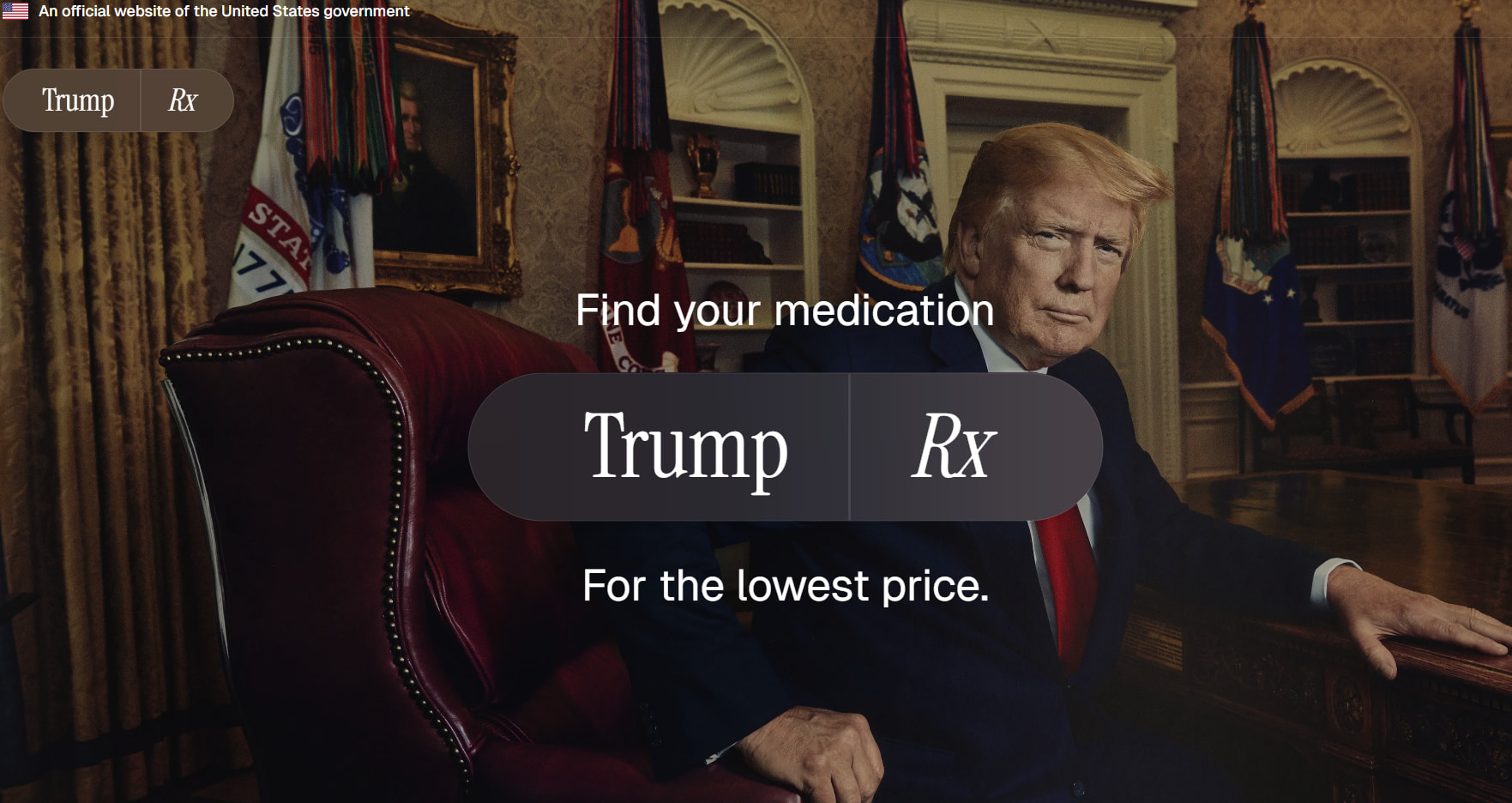
“Your prescription drugs will come way, way down and, under this policy, the prices of many drugs will be slashed by 300, 400 even 500% starting this month at the Trumprx.gov.”
“So instead of Americans paying the highest drug prices in the world, which we have for decades, we will now be paying the lowest cost paid by any other nation… that’s what we’re going to pay, and the American people will get the savings.”
Short answer: taken literally, “slashed by 500%” makes no mathematical sense. It’s almost certainly rhetorical or a misuse of percentages, not a precise claim.
Here’s why, and what it probably means.
Why it doesn’t make sense mathematically
A 100% reduction means the price goes to zero.
So:
50% cut → price halves
100% cut → price becomes $0
300%, 400%, 500% cut → impossible (you can’t reduce something by more than its entire value)
So “slashed by 500%” cannot be true in a literal, arithmetic sense.
What speakers usually intend when they say this
In political or marketing language, people often misuse percentages. Common intended meanings are:
1. “Prices will be 5× lower”
They may mean:
Old price: $100
New price: $20
That’s an 80% reduction, but the price is “down by a factor of 5.”
People often incorrectly describe this as “down 500%.”
2. “Prices will drop by hundreds of percent relative to some baseline”
This is sloppy phrasing, mixing up:
percent decrease (which caps at 100%), and
multiples / ratios (2×, 3×, 5× cheaper).
3. Pure rhetorical exaggeration
Especially in speeches, “300, 400, even 500%” is used to mean:
“Very, very large price cuts”
—not a literal numeric claim.
A clean way it should have been said
Any of these would be mathematically meaningful:
“Prices will be cut by up to 80%”
“Some drugs will be 3 to 5 times cheaper”
“Prices will fall to one-fifth of current levels”
Bottom line
Literal meaning: nonsense
Intended meaning: prices much lower, possibly several times cheaper
Signal: rhetorical / promotional language, not a precise economic statement
If you want, I can also help you rewrite this sentence in a mathematically correct way, or analyze whether any real policy could plausibly lead to reductions of that magnitude.
“Obamacare was designed to make insurance companies rich. I call it the UNAFFORDABLE Care Act, with billions of dollars and taxpayer subsidies that help their stock prices skyrocket over 1,700% as you paid more money for healthcare every single year—more and more the premiums went higher and higher.”
 starting this month at the Trumprx.gov.”