唉,以后猜豆老师薪资的时候还要再wild一点,估计underestimate太多了人家都懒得搭理
Meta 裁H1B Grace period 是notice pay 結束後開始算嗎 律師怎麼說520 就開始
这个好像是灰色地带,移民局有自由裁量权的,所以律师往保守了说吧
结果并没有,但是manager被flatten,组里又被裁了一个,更多的人被draft……

MM + remote ,不意外这次躲不掉,喜提大礼包
直接让AI来代替员工吧
昨晚oncall修到5AM 
新人又被埋了
又开始了?
1 个赞
Meta VP长文欣赏
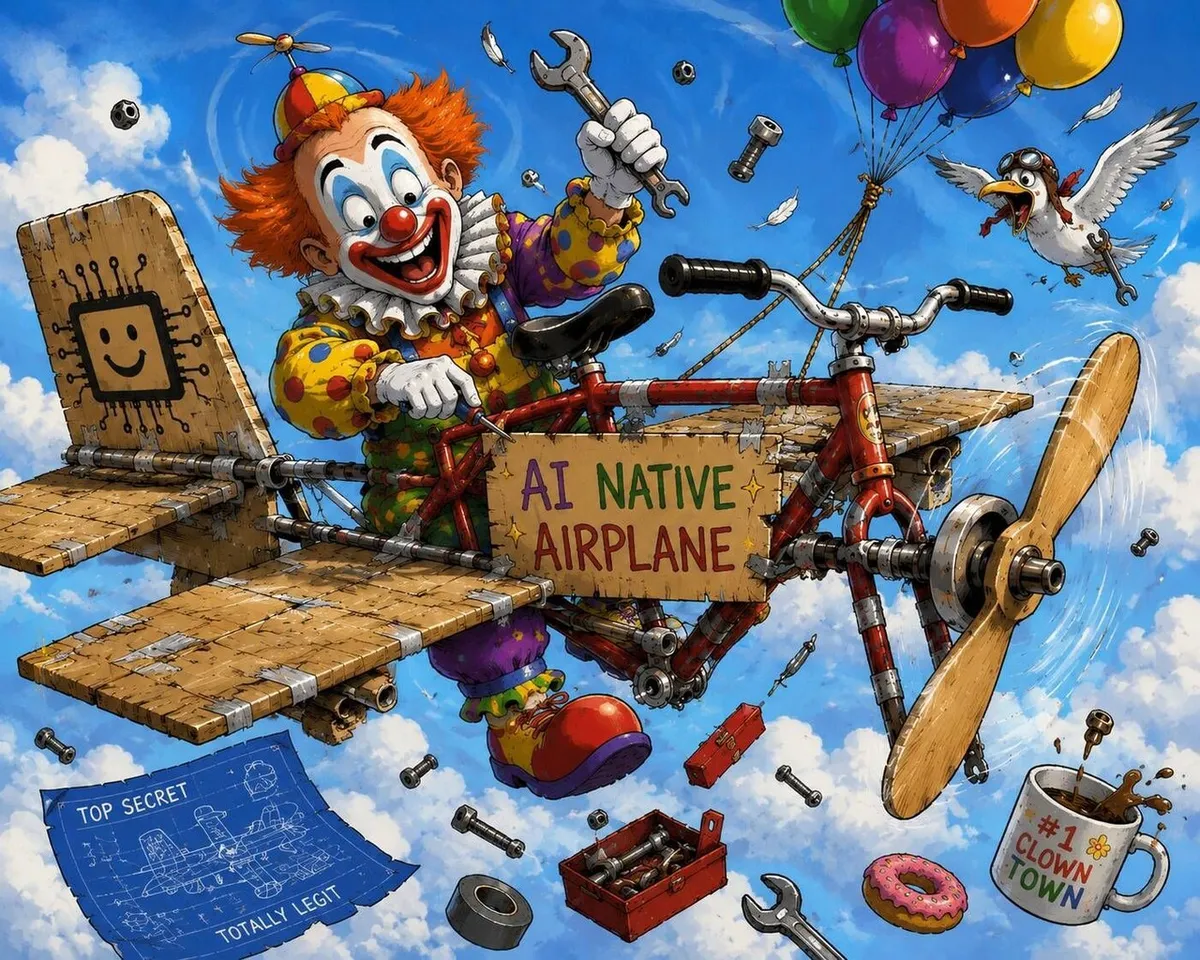
Building the AI Native Airplane
THE STARTING POINT
About a year ago, Maher Saba and I had a conversation about where the Reality Labs Foundation PG, and Reality Labs more generally, stood with AI. We landed on this analogy: “We need an airplane, and what we have is a bicycle with no wheels.”
There were two major gaps. First, no AI operating framework — no way to run an organization where AI is a major part of planning, execution, and decision-making. Second, AI couldn’t do the work we needed it to at the quality we needed it.
I’ve heard many of the same pain points from developers across the company, and we see it in the metrics around development. The goal here is to introduce some patterns on how to get work done that makes development more efficient and fun.
A year later, Reality Labs DevInfra (RLDI) isn’t flying yet — but the engine is running and we’re accelerating down the runway. The patterns below are how we got here. We hope some of them are useful as organizations and leaders across Meta think about what it means to be truly AI native — not just using AI tools, but fundamentally rethinking how organizations plan, execute, and learn. The airplane is being built in real time, by many hands. The more we share what’s working, the faster we all get there.
It’s worth mentioning up front that what we are trying to do is assist developers, and remove barriers from them doing their best work. The operating framework and infrastructure below expand on what a person can take on and remove unnecessary overhead and operational load. It also allows more people to expand their capabilities into new and adjacent domains.
The references below to specific tools and infrastructure like Pod Lead Buddy, Org Graph, and Pod Database (Pod DB) are RLDI’s solutions to patterns we believe are universal — not a pitch to adopt RLDI’s way of doing things. Many orgs across Meta are building or adapting variations optimized for their context. That’s exactly right. We don’t think people should adopt our tools (unless they fit perfectly) — they should find ones that optimize for their context. Over time more and more of these solutions will be provided by ATA.
What’s worth sharing are the patterns: AI embedded in the rhythm of business, machine-readable organizational context, human-on-the-loop execution, and systems that learn continuously. Over time, these will naturally converge on common building blocks where real leverage exists — Pod DB is one example of that convergence already happening. That convergence should be driven by what works across many contexts, not by any single team’s implementation.
THE AI NATIVE OPERATING FRAMEWORK
We needed to fundamentally redesign how RLDI operates so AI can participate meaningfully.
INTEGRATED TOOLS & INFRASTRUCTURE
-
Pod Lead Buddy (PLB) [link]: An AI operating partner for every pod and Org lead — embedded in daily workflow with persistent memory, organizational context, and the ability to take action. With the goal of eliminating operational PLB does the heavy lifting for us on status updates, tracking, communication, and reviews.
-
Pod Database (Pod DB): As 11+ orgs across Meta adopted pod structures, 18+ separate management apps emerged — each with its own database, schema, and UI. Pod DB is a company-wide platform initiative (not RLDI-owned) that replaces those apps rather than adding to them: one canonical source of truth for pod structure, membership, and roles, on Nest.
-
Profile & Onboarding Integration: Pod DB integrates into Internal Profile, Onboarding, Checkpoint, and Approvals — making organizational context AI-accessible company-wide.
-
AI Assistants (Metamate or MyClaw) + Knowledge Bases: A hierarchical set of AI Assistants (personal, pod/team, program, org) tightly integrated with persistent memory continuously keeps state updated. Agentic workflows write activity and learnings to the KBs. Teams of research agents seed the KBs from scratch.
- The RLDI org-level KB has an index of over 40 other KBs that it references for dynamic planning and reporting (scheduled and ad-hoc).
RHYTHM OF BUSINESS — AI AS OPERATING PARTNER
-
Dynamic Planning: PLB continuously synthesizes signals — velocity, blockers, metrics movements, shifting priorities — eliminating the lag between signal and awareness. It interacts with an intake agent that can be queried where you work (chat, groups, tasks), and surfaces insights in real time. Planning becomes a continuous process. RLDI is a horizontal organization that needs to integrate with different customers’ operating frameworks, and this gives us the flexibility to do that.
-
Business Reviews: PLB synthesizes status and prepares reviews. Agents learn from leaders to do pre-processing, flag areas of follow up, and suggest what those follow-ups should be. Business reviews in RLDI are asynchronous and agent-informed.
-
Status & Reporting: Continuously generated from actual work state — commits, task movement, decisions made. PLB produces status; humans validate and add judgment.
-
Each Pod Lead in RLDI saves about 6 hours per week in preparing status updates and reviews, and meeting time.
-
In total for RLDI’s ~30 pods and leadership team we’re saving between 150–200 hours per week in operational overhead.
-
AI NATIVE EXECUTION
The operating framework exists to drive execution and outcomes. AI Native Execution is a meaty topic, and both challenges and successes are well chronicled. A full discussion would be too long for this forum, and is domain dependent. Here are some key topics to consider on the journey:
HUMAN IN THE LOOP → HUMAN ON THE LOOP
We started with every AI action requiring human approval, and being human driven. We’re moving to AI executing autonomously within defined boundaries, with humans setting direction, judging outcomes, and intervening when something looks off. There are maturity levels to AI Native workflows, and we’ve found it effective to “graduate” them to Human-on-the-loop only once we’ve learned enough and built confidence in AI’s ability to operate. In practice this means engineers spend less time on boilerplate execution and more on the parts of the work that need their judgment.
SHARED KNOWLEDGE BASES AND MEMORY
We’ve invested in persistent memory spanning sessions and instances, shared knowledge bases that compound over time, and structured organizational context that grounds every AI action. We spawned research teams of hundreds of agents that seed these knowledge bases from historical context, codebases, and a variety of sources. Then AI Native loops kick in to continuously update the KBs, and learn over time.
ANTI-FRAGILE FEEDBACK LOOPS
AI Native systems get stronger from stress. Agents start working in teams to close feedback loops, and pick up work from each other. We’re starting to use native Agent-to-Agent interfaces for interactions instead of relying on legacy systems like Tasks that were built for humans.
CONTINUOUS IMPROVEMENT
AI Native workflows learn patterns of what works and doesn’t, which are captured automatically in the KBs. Processes creating friction are identified and optimized without waiting for a human to notice — this includes efficiency (time, quality, and tokens).
TAKEOFF
If you want a starting point this week, pick one — none of these require any tools:
-
Route your next status prep through whatever agent you already use, with the rule that it has to pull from real work state (commits, task tracker, chat, KBs) — not your memory.
-
Pick one recurring meeting and replace the pre-read with an agent-generated draft you edit, not author.
-
Write down the three operational questions you find yourself answering manually each day, and give them to an agent with the source-of-truth links.
These cost nothing and surface the patterns above faster than any framework doc can.
The airplane is being built in real time, by many hands. The more we share what’s working, the faster we all get airborne.
哈哈哈哈哈我周五看到的时候真的是无语极了
这个是真的难绷,发的人可能还感觉十分良好
太长了,槽点在哪?
所以meta和tiktok工作氛围和强度到底哪个更有毒
完全看组。我在meta之前的组oncall基本不存在
我见过朋友oncall还在国家公园爬山的 ,属于还没有发布任何产品的组。我最轻松的oncall差不多是每周一两个不重要的SEV,不需要连夜处理的那种。
我之前oncall手机都直接不开的。。。
mm 4月被通知找erbp 立马找headsup过的pcp 请了fmla 喜提大礼包
所有的公司都看组。。。
相对来说tt强度可能更大一些毕竟晚上要开会,但是tt job security好很多?
1 个赞